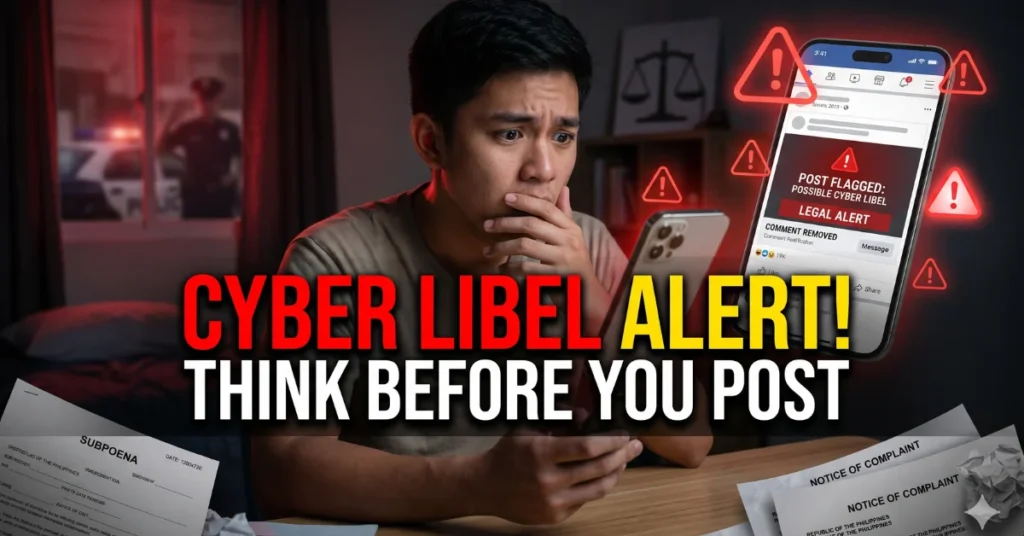
Seeing a high-profile politician surrender to authorities over Cyber Libel can immediately send a wave of panic to anyone who regularly posts strong opinions on social media. Recently, news broke out that Cavite 4th District Representative Francisco “Kiko” Barzaga turned himself in to the police after facing eight counts of this exact offense filed by a prominent business tycoon. This high-profile arrest proves that the Philippine justice system takes online defamation incredibly seriously, regardless of your social status or political immunity.
If you think your casual rants on Facebook or Twitter are protected by absolute freedom of speech, you might be putting yourself in severe legal danger. The penalties for a Cyber Libel conviction in the Philippines include massive financial fines and actual prison time. If you are terrified that a heated online argument could land you behind bars, you need to change your digital habits right now. Here are four crucial steps to protect yourself from facing a devastating lawsuit.
Pag-IBIG Housing Loan 2026: Complete Guide and Requirements
Contents
Understand the Elements of Cyber Libel
Before you post a controversial opinion, you must understand how the law officially defines Cyber Libel. Under the Cybercrime Prevention Act of 2012 (Republic Act No. 10175), defamation committed through a computer system or any digital channel is a severe criminal offense.
For a post to be legally considered Cyber Libel, four specific elements must be present. First, there must be a defamatory imputation (an accusation that ruins someone’s reputation). Second, it must be made publicly, meaning anyone on the internet can read it. Third, the person being defamed must be identifiable. Finally, there must be malice, meaning the author published the post knowing it was false or with a reckless disregard for the truth. Understanding these elements is your first line of defense.
PAG-IBIG Fund 2026: New Updates, Benefits and How Members Can Maximize Savings
4 Steps to Prevent a Cyber Libel Lawsuit
You do not have to delete your social media accounts to stay safe from legal threats. You simply need to practice responsible digital citizenship. Follow these four steps before you publish your next status update.
1. Separate Facts from Emotional Rants
The most common trigger for a Cyber Libel complaint is posting angry, unfounded accusations. If you had a terrible experience with a local business or a personal enemy, stick strictly to the objective facts. Do not add exaggerated claims, insulting name-calling, or unfounded rumors. Stating that a restaurant served you cold food is a standard consumer review; publicly claiming the owner is a criminal without solid proof crosses the line into digital defamation.
2. Avoid Using Obvious Blind Items
Many netizens mistakenly believe that if they do not explicitly state the person’s name, they are automatically immune to a Cyber Libel charge. This is completely false. Philippine courts have repeatedly ruled that if the description, circumstances, or initials provided in your “blind item” are enough for the general public to easily identify the target, the legal element of identification is satisfied.
Tyson Fury News 2026: Latest Updates, Fight Plans and What’s Next
3. Verify the Source Before Sharing
You can still be sued for online defamation even if you were not the original author of the malicious post. While simply reacting to a post is generally safe, sharing a defamatory article while adding your own confirming comments or encouraging others to hate the target can make you a co-publisher of the libelous material. Before you hit the share button on a scandalous political or celebrity rumor, verify the information through credible news outlets.
4. Delete and Retract if You Make a Mistake
If you realize that you posted false information in the heat of the moment, take immediate action. Delete the post and issue a clear, public retraction. While deleting a post does not completely erase the crime if someone already took a screenshot, a sincere public apology demonstrates a lack of continuing malice. In many cases, targets of digital defamation are willing to drop their legal complaints if the offender formally admits their mistake and repairs the damaged reputation promptly.
Shocked by a Huge Maynilad Water Bill? 4 Steps to Dispute It Fast
Official Resource: To read the full text of the Cybercrime Prevention Act of 2012 and understand your digital rights, visit the official Official Gazette of the Republic of the Philippines portal at www.officialgazette.gov.ph.
Frequently Asked Questions (FAQs)
-
1. Is the penalty for Cyber Libel heavier than standard printed libel?
Yes, Philippine law imposes a penalty one degree higher for online defamation due to its wider internet reach.
-
2. Can I be sued if I posted the defamatory comment in a private group chat?
Yes, private group chats satisfy the publication element, especially if a member leaks the screenshot publicly.
-
3. Does the truth guarantee my protection against a lawsuit?
No, you must also prove that you published the truthful statement with good motives and for justifiable ends.
-
4. How long does someone have to file a Cyber Libel case against me?
The prescriptive period for filing an online libel complaint is generally one year from the date of publication or discovery.
-
5. Can a fake account protect my identity from authorities?
No, the PNP Anti-Cybercrime Group and NBI have the authority and technology to trace IP addresses and unmask offenders.
Click Here to Learn More

John Michael Ramos is a Certified Financial Planner with over 12 years of experience in the automotive insurance and personal finance sectors. He has authored data-driven articles for leading financial publications. His goal is to simplify complex insurance jargon into easy-to-understand language.